The Story
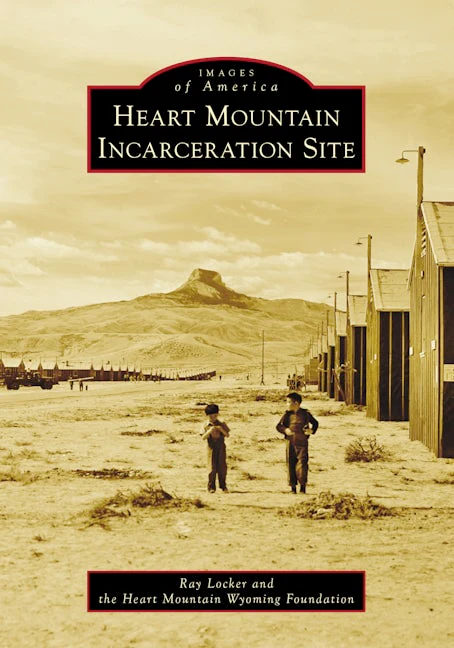
More than 14,000 people of Japanese descent—two-thirds of them US citizens—were exiled from August 1942 to November 1945 to the Heart Mountain Incarceration Site on the high desert prairie of Wyoming’s Big Horn Basin.
The site was the temporary home for Japanese Americans forced from their homes in California, Oregon, and Washington. Believed to be saboteurs or spies or both, the prisoners were viewed with fear, hatred, and sometimes acceptance by their neighbors in nearby Cody and Powell. During their time at Heart Mountain, the incarcerated people lived like the residents of any American city. Under the eye of the federal War Relocation Authority, they taught school, worked at the fire and police departments, ran stores and barbershops, and spent much of their time wondering what had happened to their former lives. Today, the site is part of the Heart Mountain Interpretive Center and Mineta-Simpson Institute.
Ray Locker is the director of communications and strategy for the Heart Mountain Wyoming Foundation. The foundation’s staff consists of experts on Japanese American history, the intersections between Wyoming’s Indigenous community and World War II’s incarcerated people, and museum professionals dedicated to telling the story of this sad chapter of American history. They used donations from those incarcerated and their families, collections in the foundation archives, the National Archives, the Library of Congress, and museums from around the country.
Description
More than 14,000 people of Japanese descent—two-thirds of them US citizens—were exiled from August 1942 to November 1945 to the Heart Mountain Incarceration Site on the high desert prairie of Wyoming’s Big Horn Basin.
The site was the temporary home for Japanese Americans forced from their homes in California, Oregon, and Washington. Believed to be saboteurs or spies or both, the prisoners were viewed with fear, hatred, and sometimes acceptance by their neighbors in nearby Cody and Powell. During their time at Heart Mountain, the incarcerated people lived like the residents of any American city. Under the eye of the federal War Relocation Authority, they taught school, worked at the fire and police departments, ran stores and barbershops, and spent much of their time wondering what had happened to their former lives. Today, the site is part of the Heart Mountain Interpretive Center and Mineta-Simpson Institute.
Ray Locker is the director of communications and strategy for the Heart Mountain Wyoming Foundation. The foundation’s staff consists of experts on Japanese American history, the intersections between Wyoming’s Indigenous community and World War II’s incarcerated people, and museum professionals dedicated to telling the story of this sad chapter of American history. They used donations from those incarcerated and their families, collections in the foundation archives, the National Archives, the Library of Congress, and museums from around the country.