$26.00
How to Be Normal—
$26.00
The Story
“Erudite riffs on race, religion, masculinity and [more]. . . . A crisp set of essays that bring big social and cultural debates to a human level.” —Kirkus Reviews
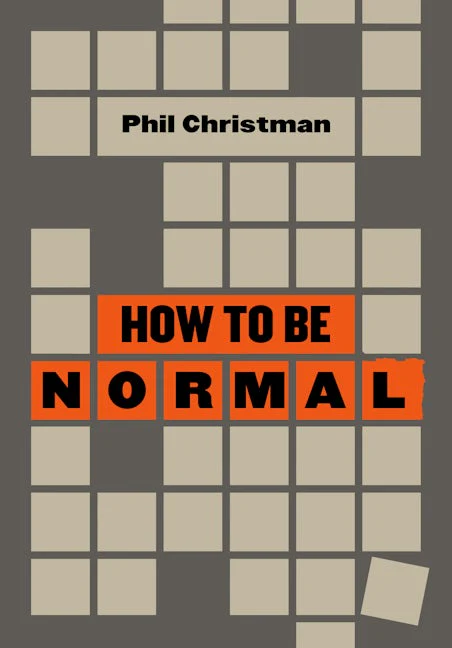
Phil Christman is one of the best cultural critics working today. Or, as a reviewer of his previous book, Midwest Futures, put it, “one of the most underappreciated writers of [his] generation.” You may also know Phil from his columns in Commonweal and Plough, or his viral essay “What Is It Like To Be A Man?”, the latter adapted in his new book, How to Be Normal. Christman’s second book includes essays on “How To Be White,” “How to Be Religious,” “How To Be Married,” and more, in addition to new versions of previously published essays. You’ll also find brilliant analyses of middlebrow culture, bad movies, Mark Fisher, Christian fundamentalism, and more. With exquisite attention to syntax and prose, the astoundingly well-read Christman pairs a deceptively breezy style with radical openness. In his witty, original hands, seemingly “normal” subjects are rendered exceptional, and exceptionally.
“A probing and provocative collection.” —Publishers Weekly
“Engaging a belles-lettristic negative capability, Christman takes on the big subjects while always remembering that the point of criticism is to more fully be a person, part of ‘our little attempts that we make at building a home in this world.’” —Ed Simon, The Millions
“Christman charts a frank and fearless guide for the perplexed, the battered, the exhausted, and the outraged.” —Chris Lehmann, The New Republic
“Earnest and intense.” —Richard Babcock, Wall Street Journal
Phil Christman is one of the best cultural critics working today. Or, as a reviewer of his previous book, Midwest Futures, put it, “one of the most underappreciated writers of [his] generation.” You may also know Phil from his columns in Commonweal and Plough, or his viral essay “What Is It Like To Be A Man?”, the latter adapted in his new book, How to Be Normal. Christman’s second book includes essays on “How To Be White,” “How to Be Religious,” “How To Be Married,” and more, in addition to new versions of previously published essays. You’ll also find brilliant analyses of middlebrow culture, bad movies, Mark Fisher, Christian fundamentalism, and more. With exquisite attention to syntax and prose, the astoundingly well-read Christman pairs a deceptively breezy style with radical openness. In his witty, original hands, seemingly “normal” subjects are rendered exceptional, and exceptionally.
“A probing and provocative collection.” —Publishers Weekly
“Engaging a belles-lettristic negative capability, Christman takes on the big subjects while always remembering that the point of criticism is to more fully be a person, part of ‘our little attempts that we make at building a home in this world.’” —Ed Simon, The Millions
“Christman charts a frank and fearless guide for the perplexed, the battered, the exhausted, and the outraged.” —Chris Lehmann, The New Republic
“Earnest and intense.” —Richard Babcock, Wall Street Journal
Description
“Erudite riffs on race, religion, masculinity and [more]. . . . A crisp set of essays that bring big social and cultural debates to a human level.” —Kirkus Reviews
Phil Christman is one of the best cultural critics working today. Or, as a reviewer of his previous book, Midwest Futures, put it, “one of the most underappreciated writers of [his] generation.” You may also know Phil from his columns in Commonweal and Plough, or his viral essay “What Is It Like To Be A Man?”, the latter adapted in his new book, How to Be Normal. Christman’s second book includes essays on “How To Be White,” “How to Be Religious,” “How To Be Married,” and more, in addition to new versions of previously published essays. You’ll also find brilliant analyses of middlebrow culture, bad movies, Mark Fisher, Christian fundamentalism, and more. With exquisite attention to syntax and prose, the astoundingly well-read Christman pairs a deceptively breezy style with radical openness. In his witty, original hands, seemingly “normal” subjects are rendered exceptional, and exceptionally.
“A probing and provocative collection.” —Publishers Weekly
“Engaging a belles-lettristic negative capability, Christman takes on the big subjects while always remembering that the point of criticism is to more fully be a person, part of ‘our little attempts that we make at building a home in this world.’” —Ed Simon, The Millions
“Christman charts a frank and fearless guide for the perplexed, the battered, the exhausted, and the outraged.” —Chris Lehmann, The New Republic
“Earnest and intense.” —Richard Babcock, Wall Street Journal
Phil Christman is one of the best cultural critics working today. Or, as a reviewer of his previous book, Midwest Futures, put it, “one of the most underappreciated writers of [his] generation.” You may also know Phil from his columns in Commonweal and Plough, or his viral essay “What Is It Like To Be A Man?”, the latter adapted in his new book, How to Be Normal. Christman’s second book includes essays on “How To Be White,” “How to Be Religious,” “How To Be Married,” and more, in addition to new versions of previously published essays. You’ll also find brilliant analyses of middlebrow culture, bad movies, Mark Fisher, Christian fundamentalism, and more. With exquisite attention to syntax and prose, the astoundingly well-read Christman pairs a deceptively breezy style with radical openness. In his witty, original hands, seemingly “normal” subjects are rendered exceptional, and exceptionally.
“A probing and provocative collection.” —Publishers Weekly
“Engaging a belles-lettristic negative capability, Christman takes on the big subjects while always remembering that the point of criticism is to more fully be a person, part of ‘our little attempts that we make at building a home in this world.’” —Ed Simon, The Millions
“Christman charts a frank and fearless guide for the perplexed, the battered, the exhausted, and the outraged.” —Chris Lehmann, The New Republic
“Earnest and intense.” —Richard Babcock, Wall Street Journal